
Hashimoto's Disease Causes and Antibody Testing
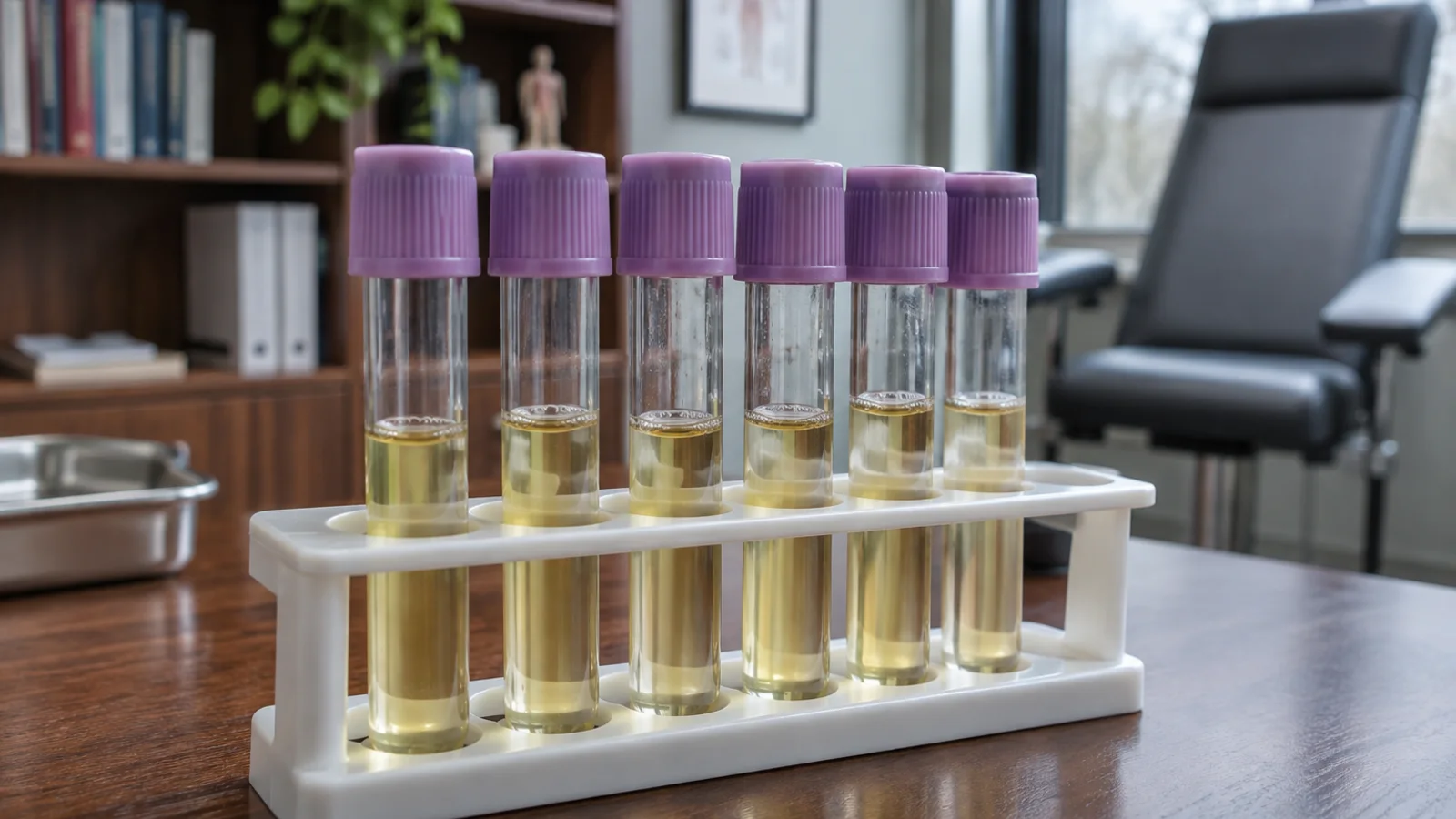
NIDDK describes Hashimoto's disease in two passages. One covers what happens inside the thyroid. The other covers which tests are used. Together they show where antibody testing fits.
What NIDDK says happens in the gland
NIDDK wrote that in people with Hashimoto's disease the immune system makes antibodies that attack the thyroid gland, and large numbers of white blood cells build up in the thyroid.
NIDDK added that the thyroid becomes damaged and can't make enough thyroid hormones.
The passage lists four things in order: antibodies, white blood cells, damage and low hormone output. For general symptoms and treatment, Healthline's overview of an underactive thyroid is a separate read.
Why the hormone line matters
NIDDK also wrote that thyroid hormones control how your body uses energy, so they affect nearly every organ in your body, even the way your heart beats.
The claim is broad, and it carries its own limit. The word "nearly" is a boundary the source chose, so the sentence stops short of every organ.
Which tests the text names
NIDDK lists tests for the thyroid hormones T4 (thyroxine) and T3 (triiodothyronine), for thyroid-stimulating hormone, or TSH, and for thyroid peroxidase antibodies (TPO), a type of thyroid antibody that is present in most people with Hashimoto's disease.
NIDDK adds that you probably won't need other tests to confirm you have Hashimoto's disease.
TPO is the only antibody named. The text says it is present in most people with the disease, which is not the same as all. NIDDK's separate page on hypothyroidism covers the condition that follows when the gland can't keep up.
Where claims run past the text
A page that says a normal antibody result rules out Hashimoto's disease needs another source, because the passage says TPO is present in most people with it, not in everyone. The text also describes what the immune system does. It does not say why the immune system does it.
The question left open
The passages do not say which values count as abnormal or how often the tests should be repeated. A reader in Berkeley Heights, New Jersey can take the named tests to a prescriber and ask which of them apply. The full source for both passages is NIDDK's Hashimoto's disease page.