
Hypothyroidism Diagnosis, Treatment and Monitoring Overview
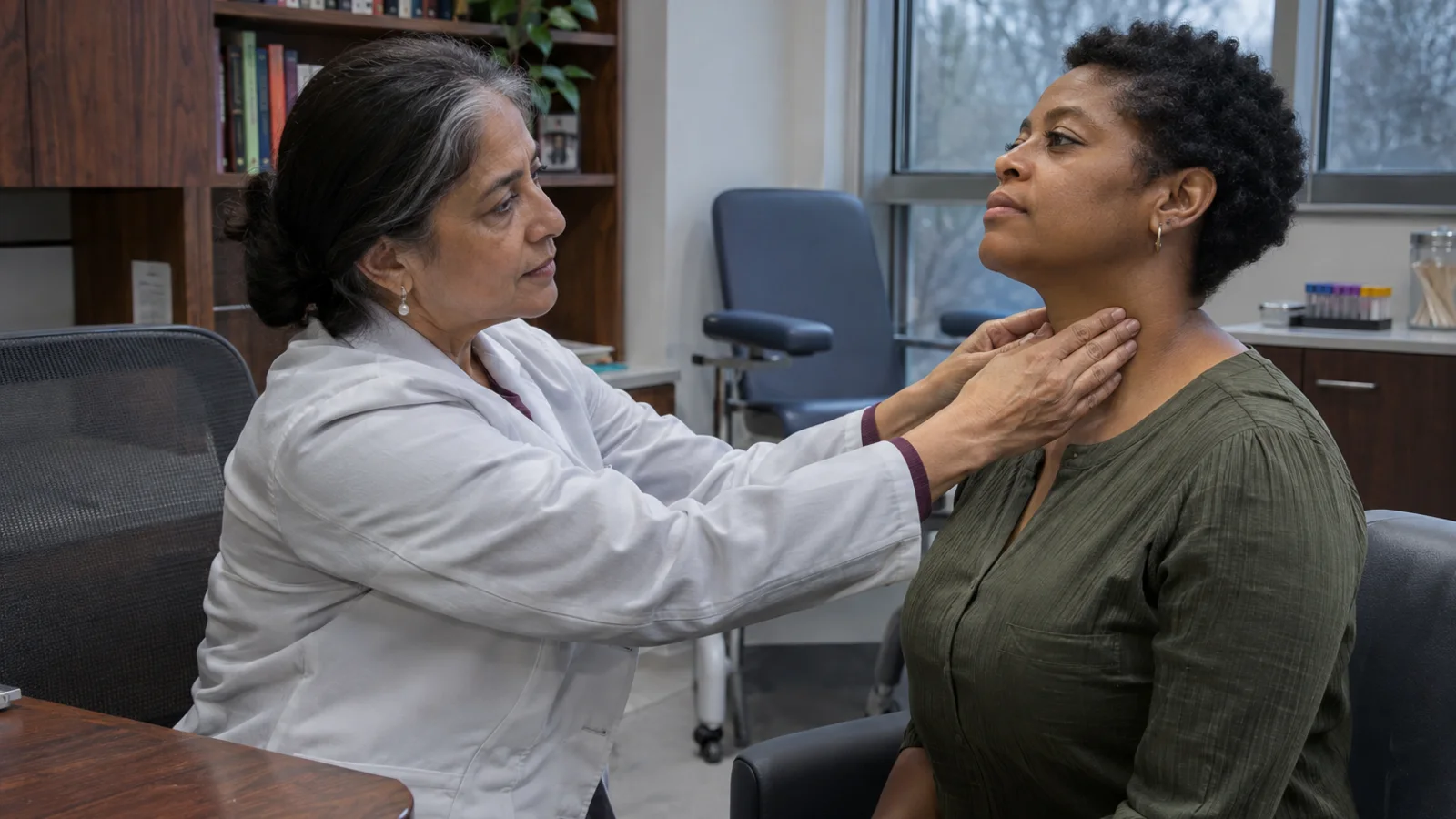
NIDDK puts the defining sentence for this topic up front: "A hypothyroidism diagnosis can’t be based on symptoms alone because many of its symptoms are the same as those of other diseases."
The sentence gives a reason along with the rule. Symptoms overlap with other diseases, so symptoms alone cannot settle the question. That is why this topic sits on a blood test and not on a checklist of how you feel.
The schedule, as written
NIDDK sets out the follow-up in two sentences. The first: "Your doctor will give you a blood test about 6 to 8 weeks after you begin taking the medicine, adjusting your dose if needed."
The second: "Once you’ve reached a dose that’s working for you, your doctor will probably repeat the blood test in 6 months and then once a year."
Look at the hedges a literal reader notices. The timing is "about" 6 to 8 weeks, the dose is adjusted "if needed," and the repeat test is something the doctor "will probably" do. None of those phrases is a fixed promise.
Where each article picks up
Readers in Berkeley Heights who want the diagnosis and the cause read in two separate places.
- Diagnosing Hypothyroidism With Thyroid Blood Tests follows the blood test the first sentence relies on.
- Hashimoto's Disease Causes and Antibody Testing covers the antibody side of the same workup.
NIDDK also keeps a separate entry on Hashimoto's disease. Healthline publishes its own overview, Hypothyroidism (Underactive Thyroid): Symptoms, Causes, Treatment, which is useful to read against the NIDDK wording.
The word to reread
Go back to "probably" in the second sentence. It tells you the monitoring schedule is an expectation and not a guarantee, so ask your own doctor to name the next test date and write it down.